
The Hidden Career Trap for Scrum Masters: Being Everyone’s Helper
What I learned after coaching teams that unknowingly turned me into their “go-to fixer."

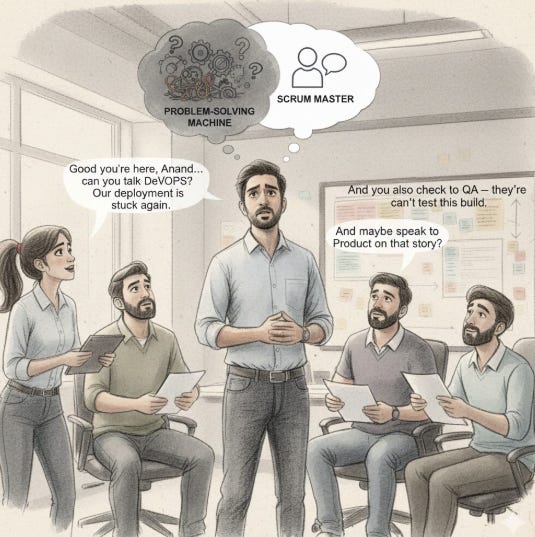
A few years ago, I walked into a Daily Scrum event where the team looked unusually relieved.
“Good you’re here, Anand… can you talk to DevOps? Our deployment is stuck again.”
“Can you also check with Product on that story?”
“And maybe speak to QA — they’re saying they can’t test this build.”
Every pair of eyes turned to me — hopeful, but exhausted.
I didn’t say anything immediately.
But in that moment, I realized -
I had become the team’s problem-solving machine.
Not their Scrum Master.
By the time the Daily Scrum ended, I had six action items that didn’t belong to me.
And walking back to my desk, I felt something heavy —
a mix of pride (“They trust me”)
and frustration (“Why am I doing everyone’s job?”).
That week taught me the biggest lesson of all:
When a Scrum Master becomes everyone’s helper, the team stops becoming self-managing.
The Playbook for Breaking the “Helper Trap” Without Breaking Trust
Strategy-01: Replace “Let me handle it” with “How do you want to approach it?”
What To Do
In your next stand-up, when someone asks for help, respond with: “Okay, what have you tried so far?”
Follow up with: “Who do you think is best placed to solve this?”
Ask the team to propose their next step — then support the direction they choose.
Only step in when it’s a systemic blocker, not a local workaround.
Challenge I Faced
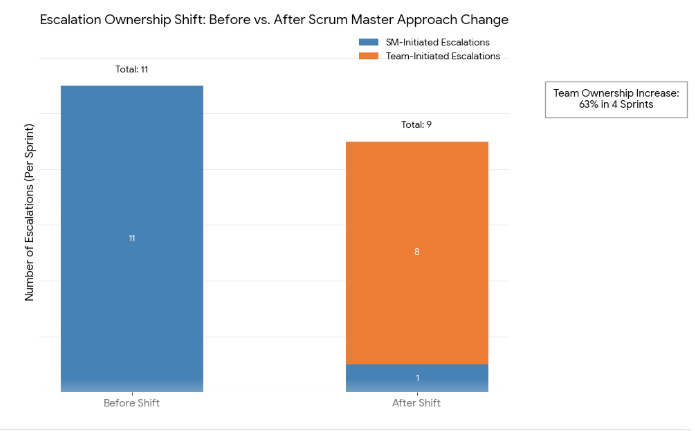
When I first tried pushing questions back to the team, they felt abandoned.
One developer even said: “But you always handle these things. Why change now?”
I told them honestly: “If I solve everything, you won’t grow — and the team won’t scale.”
Once they understood why, resistance melted down.
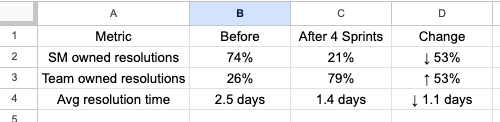
Strategy-02: Track “Ownership Drift” Using Hard Team Data
What To Do
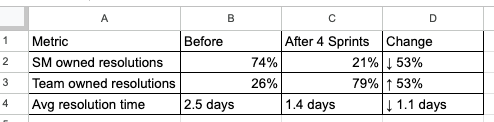
Create a simple Ownership Tracker in Excel with 4 columns:
Blocker reported
Who takes first action?
Resolution owner
Time to resolve
Review this weekly in your Sprint Retrospective.
Highlight patterns — especially when the SM appears too often in Column 2 or 3.
Redirect ownership through explicit agreements in the team.
Challenge I Faced
When I first showed this data, the team said: “But you’re faster.”
That hurt more than I expected.
Because being “fastest” was exactly the trap.
I reframed it: “Fastest is good for today. Ownership is how we get better for tomorrow.”
They got it. And they stepped up.
Strategy-03: Facilitate a “Responsibility Reset” Workshop
What To Do
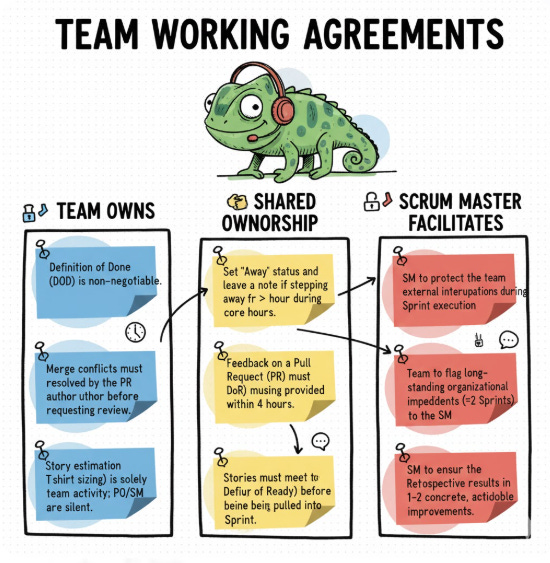
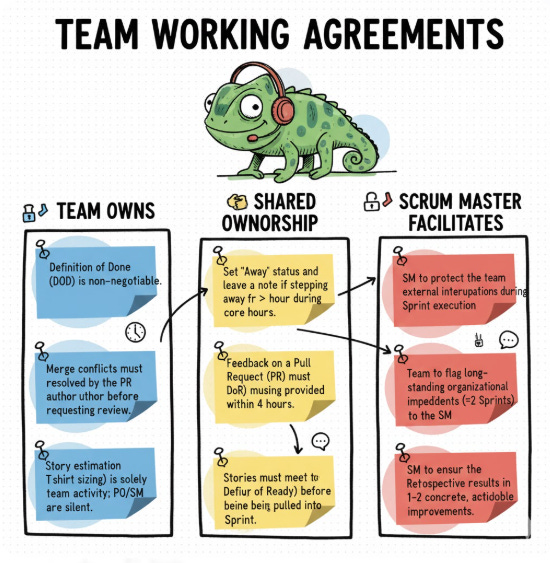
On a Mural board, list 3 zones:
Team owns
Shared ownership
Scrum Master facilitates
Give every team member 10 sticky notes to place under each zone.
Discuss mismatches.
Convert the final agreement into a Team Working Agreement.
Challenge I Faced
Some team members resisted taking on stakeholder interactions.
The fear was clear: “What if I say the wrong thing?”
I role-played difficult conversations with them.
Created scripts.
Practiced scenarios.
Confidence grew.
And suddenly the SM wasn’t the communication bottleneck anymore.
Strategy-04: Stop Being the Default “Meeting Organizer”
What To Do
Let team members rotate facilitation for:
Daily Scrum
Refinement
Retro (once a month)
Use a simple rotation schedule.
Support them with templates, not ownership.
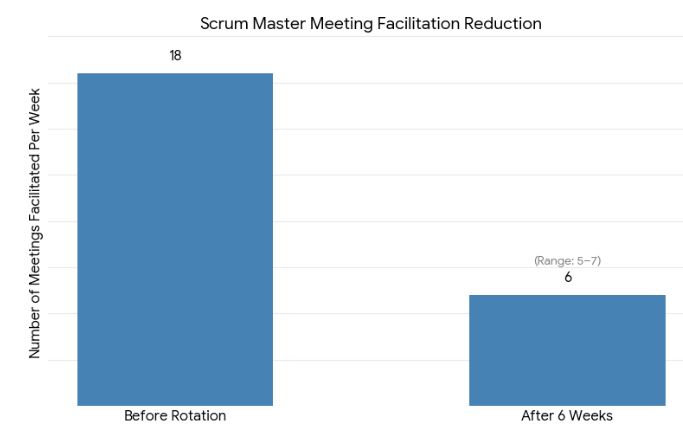
Burden dropped — and team confidence grew.
Challenge I Faced
Some people felt shy or unprepared.
One member said: “I’m not a ‘talking’ person.”
I paired them for the first two sessions.
Gave them scripts, timers, sample agendas.
They flourished.
Strategy-05: Use the “Empowerment Ladder” Instead of Direct Answers
What To Do
When someone brings you a problem, respond with progressive questions:
“What options do you see?”
“Which one feels most practical?”
“What’s stopping you from trying it?”
“How can I support you without taking over?”
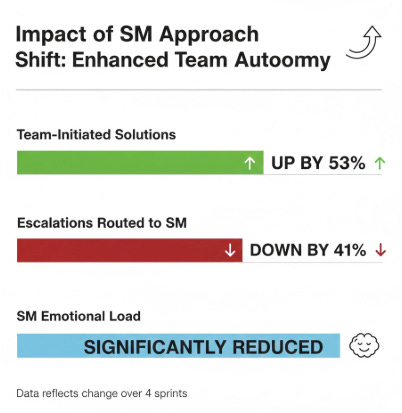
Over weeks, the team will climb the ladder — from dependence → empowerment.
Challenge I Faced
Someone said, half jokingly: “You’re asking too many questions these days.”
It stung.
But I reminded myself: questions build thinking; answers build dependence.
I explained openly: “My goal is not to reduce support — it’s to increase your confidence.”
And with time, they understood.
Reflection Challenge
Before your next Sprint, ask your team: “What’s one area where we’re leaning too much on the Scrum Master?”
Then sit quietly.
Let them think.
That conversation alone can unlock growth.
Helping is good.
But building a team that no longer needs your help — that’s leadership.
Quick Checklist: Breaking the Helper Trap
Ask coaching questions, not solutions.
Track ownership drift with data.
Reset responsibilities visually.
Rotate meeting facilitation.
Use empowerment questions every day.
Join our Community — Practice It Live!
If you want to practice these techniques live, join my next AI & Agile Career Accelerator - Community of Practice.

🚀 Join us this Saturday. Practice real scenarios, get coached live, and build the confidence to lead your next refinement like a pro.
Ace Every Interview Question — With Real Answers That Work
If you’re preparing for Scrum Master, Agile Coach, or Product Owner interviews, this is your go-to prep pack. New set every week!
📥 Download your free Agile Interview Q&A Set here →
Why Subscribe
Each week, I share battle-tested strategies, messy lessons, and practical tools that help Scrum Masters, Product Owners, and change agents like you make sense of chaos — without sugar-coating it.
If you found this useful, subscribe.
This isn’t theory. It’s real work, made a little easier — one step at a time.
Thanks for reading Strategy For Success! Subscribe for free to receive new posts and support my work.
“Just because I understand it, does not mean everyone understands it. And just because I do not understand it, does not mean no one understands it.”

Anand Pandey
Thanks for reading Strategy For Success! Subscribe for free to receive new posts and support my work.