
The reference-check test for every resume bullet
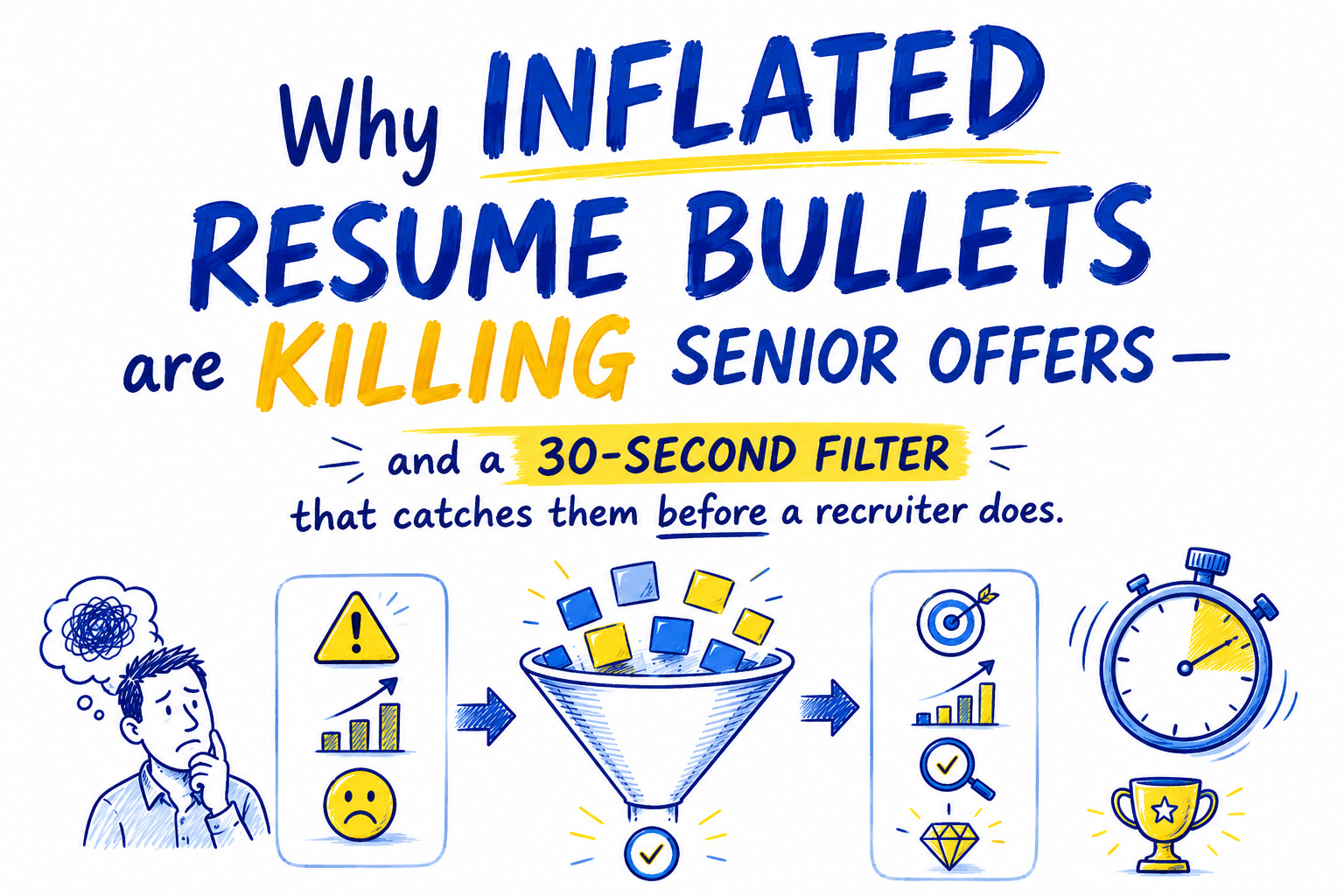
Why inflated resume bullets are killing senior offers — and a 30-second filter that catches them before a recruiter does.

A coaching client lost an offer last week — at the reference stage.
He’d done everything right. Strong CV. Three rounds clean. Verbal offer on the table. Then his former manager got the reference call.
The recruiter came back two days later with a polite, vague “we’ve decided to go in a different direction.”
When we debriefed, I asked him to read me three bullets from his resume. Then I asked him to imagine his last manager being asked, on a call, “Would you confirm this?”
He went quiet on the second bullet.
His resume said: “Led the agile transformation across three product teams.”
He admitted: “My manager would probably say I supported it. The transformation was already underway when I joined.”
That gap — between led and supported — is what cost him the offer. Not in the interview. In the call he never heard.
Reference checks don’t catch lies. They catch inflation. And inflation is what most resumes are quietly built on.
Here’s what makes this trap dangerous: the inflated bullets often feel true when you write them. You did do the work. You were in the room. You contributed. But the verb you chose — led, drove, owned, transformed — claimed more than your manager would confirm.
In a junior interview, the gap might not matter. In a senior one, it’s the entire difference.
Inflated: “Led delivery for a portfolio of 4 products generating $20M ARR.”
Manager would actually say: “Was one of three Scrum Masters on the portfolio. Owned one of the four products. Solid delivery.”
Same person. Same year. Two completely different stories — and only one of them survives a reference call.
The “what would my manager say?” filter
For every bullet on your resume, ask this question:
If my last manager were called tomorrow and asked to confirm this exact sentence — would they?
That’s the whole filter. 30 seconds per bullet.
Three possible answers:
“Yes, word for word.” Leave it. This is your strongest material.
“Yes, but they’d say it smaller.” Rewrite to match what they’d say. You’ll lose a verb. You’ll gain the offer.
“No, they’d push back on this.” Cut it, or rewrite it as something they would confirm — even if it sounds less impressive.
Most candidates have 2-3 bullets that fail this filter and don’t know it. Until the reference call.
If you can’t run this filter on your own resume — that’s not a writing problem. That’s the bullet that’s going to cost you the offer.
If you want to practise this live — with feedback, in front of others — I run a Hot Seat session where one person works through real interview pressure with the group. It’s free, it’s uncomfortable, and it’s the fastest way I know to get unstuck. Reply with “Hot Seat” and I’ll add you to the next one.
Which bullet on your resume wouldn’t survive the call?
— Anand