
What I Learned About Hybrid Team Collaboration the Hard Way
5 field-tested facilitation moves to make remote and in-office members feel like one team again.

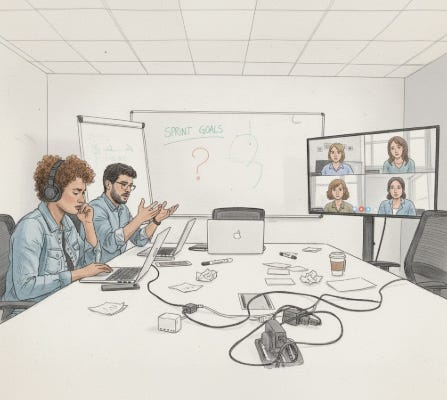
It was our first hybrid Sprint Planning after offices reopened.
Half the team was back in the office — whiteboard, sticky notes, chai in hand.
The other half joined on Zoom — muted, cameras off, lagging audio.
Ten minutes in, the office folks were laughing at an inside joke.
A remote developer unmuted to contribute, but by then the topic had already changed.
By the end of the meeting, my chat pinged:
“Anand, I feel invisible. It’s like the team forgot I exist.”
That line stayed with me.
We hadn’t lost technical collaboration — we had lost psychological inclusion.
So, I stopped trying to “make hybrid work.”
Instead, I started designing for equal voices.
Here’s exactly how I did it.
5 Strategies That Actually Worked
Strategy 1: Equalise the Meeting Experience — Not the Location
Action Steps:
Start from Day 1: Ask everyone (even in-office folks) to join all Scrum events from their own laptop and headset. “If we don’t experience the same environment, we won’t have the same voice.”
Setup matters:
One large screen for gallery view.
One good microphone (no echo).
No side chatter in the room — it kills remote inclusion.
Visual sync: Use one shared virtual whiteboard (Miro/Mural) — no sticky notes on the wall unless mirrored online.
Facilitator rotation: Every Sprint, rotate who runs one ceremony — make sure at least one remote person leads.
When I let a remote developer facilitate the Retrospective, office folks realised how confusing their side-talk was. The next sprint, they voluntarily changed how they spoke in meetings.
Challenge I faced:
Office members felt it was “silly” to open laptops when sitting together.How I Overcame:
I ran an A/B experiment — one meeting with mixed mode, one fully digital. Then I asked, “Which felt more inclusive?” They voted 9–1 for full-digital.
Strategy 2: Build “Remote-First” Communication Habits
Action Steps:
Codify decisions. Every hallway talk → summary in Slack #daily-decisions channel within 1 hour. “If it’s not written, it didn’t happen.”
Structure Daily Scrum:
Remote members speak first.
Use a shared Jira board — everyone moves their own tickets.
Timebox to 15 minutes flat.
Weekly async update: A Friday post in Confluence: “This Week’s Wins.”
Anyone can read it anytime — no time zone bias.
We used to miss dependencies because office folks made decisions post-lunch. Once we started writing short decision notes, dependency bugs dropped by 40% in two sprints.
Challenge I faced:
Remote teammates complained, “We learn about changes too late.”How I Overcame:
We created a Slack workflow that pinged the #team channel every time a Jira ticket was moved to “In Review.” No more surprises.
Strategy 3: Design Collaboration Around Visuals
Action Steps:
Replace talking with showing:
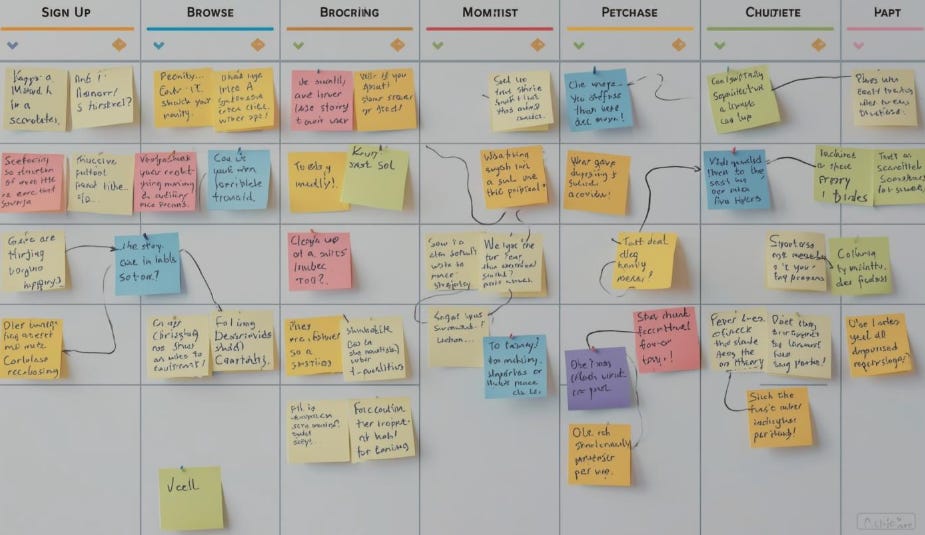
Use visual story maps in refinement — group stories by value flow, not tickets.Silent brainstorm:
Before retros, everyone adds notes in Miro silently for 5 minutes.
Then discuss patterns — not opinions.Visual pair work:
Pair remote + onsite devs on one Miro space or shared IDE screen (Tuple/VS Code Live Share).
We once split a story wrongly because remote testers couldn’t “see” the impact. Once we moved to Miro workflows, story discussions became faster — and more equal.
Challenge I faced:
People initially found Miro “clunky.”How I Overcame:
I gamified it — “Whoever adds 3 stickies first gets a coffee mug.”
Within a week, everyone was comfortable.
Strategy 4: Humanise Hybrid — Create Shared Non-Work Rituals
Action Steps:
Start retros with emotional check-ins.
Ask, “Describe your week in one emoji or GIF.”
Laughter breaks tension, builds connection.Host “Remote Lunches” once a month.
Everyone joins video call with lunch — no agenda, just chat.Celebrate small wins together.
Play quick games (Kahoot, Skribbl.io) after each release.
Example:
After our first “Remote Lunch,” a senior dev said,
“I didn’t know our QA has two cats. Now we actually talk more.”
This human bond later helped when we hit delivery pressure — they helped each other without being told.
Challenge:
Leaders said, “We don’t have time for games.”How I Overcame:
I framed it as “Team Energy Budget.”
“We spend hours fixing bugs. Let’s spend 15 minutes preventing burnout.”
Once morale improved, no one questioned it again.
Strategy 5: Measure and Improve Hybrid Collaboration
Action Steps:
Add one question to every Retro:
“Did you feel equally included this Sprint?” (1–5 scale)
Track the trend over time in Confluence.
Pick one hybrid improvement every Sprint — small but visible.
Share before-after examples in Sprint Review.
Example:
When we added that feedback question, inclusion scores went from 3.1 → 4.5 in 6 sprints.
We didn’t fix hybrid overnight — we improved it 1 habit at a time.
Challenge I faced:
People said, “This feedback won’t change anything.”How I Overcame:
I made feedback visible — showed improvement graphs in Sprint Review slides. When leaders saw trends, they started supporting change more actively.
Turn Remote Silence into Real Hybrid Collaboration — Practice It Live!
Hybrid teams don’t fail because of tools — they fail because of habits.
The good news?
Habits can be redesigned, one Sprint at a time.
If you want to experience how to bring remote and in-office members together into one truly connected team, join my next Scrum Career Accelerator – Community of Practice.
We don’t just talk about hybrid facilitation —
we simulate real Sprint scenarios where half the team is in the office, the other half remote,
voices overlap, people disengage… and you learn to bring it all back together.
You’ll practice exactly how to redesign ceremonies, manage energy, and keep every voice included —
with calm, confidence, and empathy.

🚀 Join us this Saturday. Practice real scenarios, get coached live, and build the confidence to lead your next refinement like a pro.
Master Every Interview Question on Collaboration in Hybrid Teams!
Ever been asked in an interview:
“How do you manage collaboration when half your Scrum team works remotely and the other half sits in the office?”
Or worse —
“What do you do when remote members feel disconnected or unheard in hybrid meetings?”
Most candidates give safe textbook answers like, “We use Zoom, Miro, and Slack to stay connected.”
But when the interviewer digs deeper —
“Tell me how you actually made remote members feel included?” —
they hesitate.
Not because they don’t know Agile,
but because they’ve never lived through that awkward silence where one side of the room talks,
and the remote side slowly stops trying.
That’s exactly why I’ve created a Practical Interview Question Set on Hybrid Team Collaboration & Facilitation —
based on real sessions I’ve facilitated with teams spread across locations, time zones, and comfort zones.
Inside this guide, you’ll find:
✅ 10 real interview questions about managing communication and connection in hybrid Scrum setups
✅ Story-style answers with facilitation scripts, visuals, and examples from real retros and planning sessions
This isn’t theory — it’s drawn straight from live hybrid ceremonies, remote tensions, and facilitation moments that actually worked.
If you’re preparing for a Scrum Master, Agile Coach, or Product Owner role,
this is your go-to toolkit to show you can handle the human side of hybrid collaboration.
📥 Download your free Hybrid Collaboration Q&A Set here →
Start preparing like professionals who’ve actually coached collaboration in hybrid teams — not just talked about it in slides.
📚 From My Shelf
📘 This Week’s Book: Deep Work by Cal Newport
(A must-read for anyone trying to do meaningful work in a distracted world.)
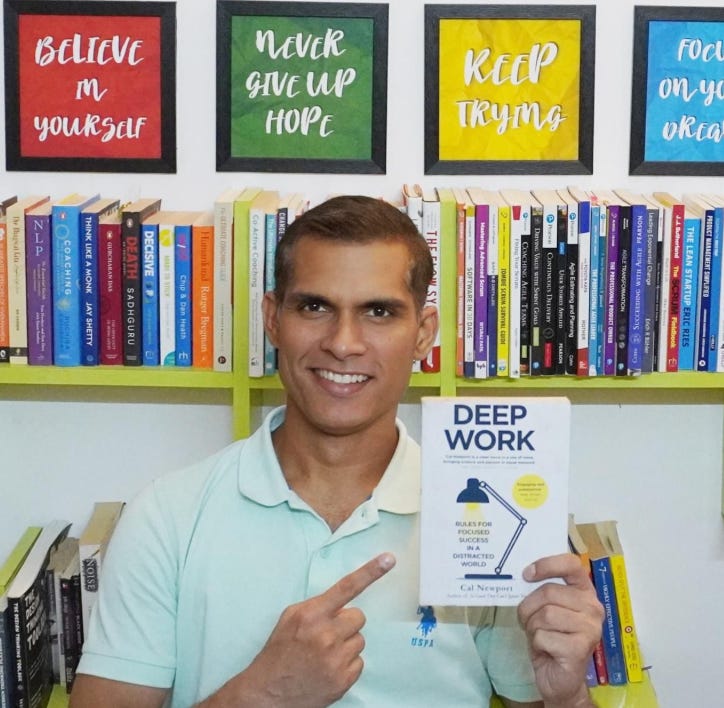
Cal Newport doesn’t talk about time management.
He talks about focus management — the ability to create uninterrupted space for thinking, building, and creating.
The kind of discipline that turns busy professionals into masters of their craft.
What influenced me most?
“Clarity about what matters provides clarity about what does not.”
For any Scrum Master or Product Owner constantly juggling meetings and context switches—this book is a masterclass in deliberate focus, not endless hustle.
Why Subscribe
Each week, I share battle-tested strategies, messy lessons, and practical tools that help Scrum Masters, Product Owners, and change agents like you make sense of chaos — without sugar-coating it.
If you found this useful, subscribe.
This isn’t theory. It’s real work, made a little easier — one step at a time.
“Just because I understand it, does not mean everyone understands it. And just because I do not understand it, does not mean no one understands it.”

Anand Pandey
Thanks for reading Strategy For Success! Subscribe for free to receive new posts and support my work.