
What I Learned After Watching Talented Scrum Masters Stay Stuck for Years
Hard lessons about career growth no certification ever teaches you

Over the last decade, I’ve coached many Scrum Masters who were genuinely good at their job.
They ran clean events.
Their teams liked them.
Delivery was mostly smooth.
Conflicts rarely escalated.
And yet…
Five years later, they were still in the same role.
Same title.
Same compensation band.
Same level of influence.
While others — sometimes less “perfect” — moved ahead.
I remember one Scrum Master in particular.
Smart. Calm. Respected by the team.
Always available. Always helpful.
During one coaching conversation, he said:
“Anand, I don’t understand. I’m doing everything right. What am I missing?”
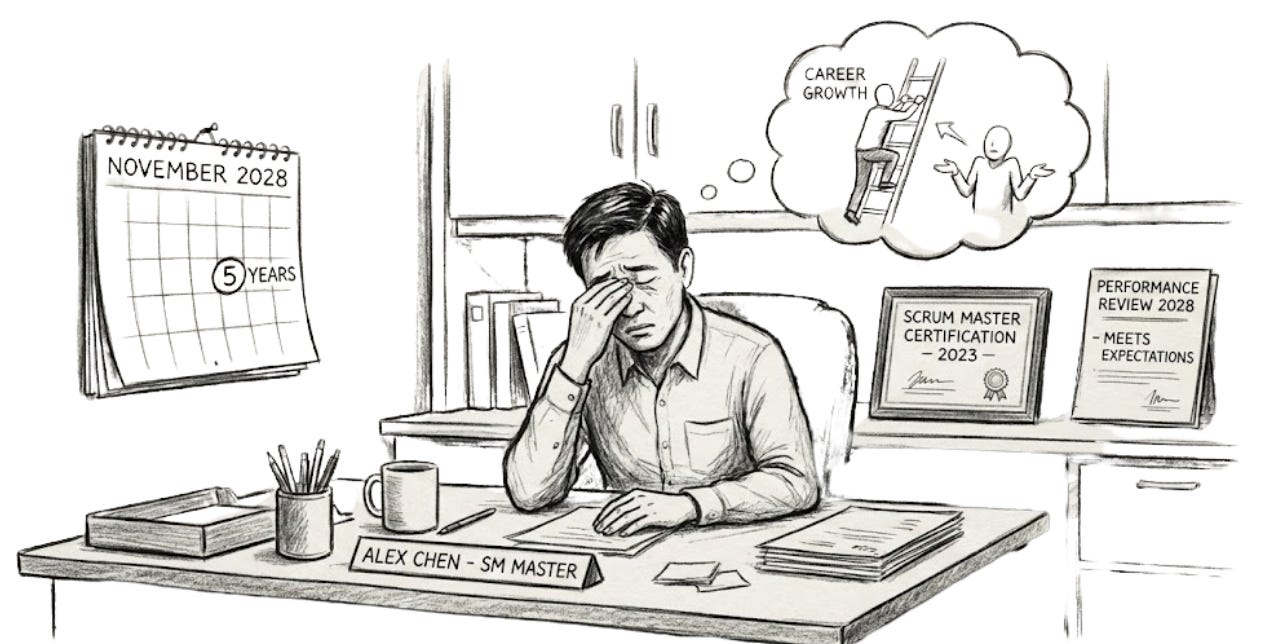
Here is the uncomfortable truth:
Most Scrum Masters who stay stuck aren’t underperforming.
They’re invisible in the ways that matter for career growth.
Watching this pattern repeat — across companies, cultures, and seniority levels — forced me to confront some hard truths. Including my own early mistakes.
This newsletter is about those lessons.
🎯 What I Learned the Hard Way
I used to believe that good work speaks for itself.
It doesn’t.
In most organisations, career growth is not driven by:
effort
sincerity
how busy you are
how many meetings you run
It’s driven by:
visible impact
business relevance
decision influence
leadership trust
And that gap — between effort and visibility — is where many talented Scrum Masters get stuck.
Here’s what I learned by watching it happen again and again.
The Playbook: Career Lessons from Scrum Masters Who Stayed Stuck
Lesson 01: Being Helpful Is Not the Same as Being Valuable
This one is uncomfortable — but important.
Many Scrum Masters build their identity around being helpful:
fixing problems quietly
resolving conflicts behind the scenes
shielding the team from pressure
stepping in whenever things go wrong
The team appreciates it.
Managers often don’t even notice it.
I’ve seen Scrum Masters become indispensable to the team — and still be considered replaceable by leadership.
Helpfulness scales poorly. Impact scales well.
What You Can Do
Stop saying:
“I helped the team…”Start framing work as:
“Because of this change, X improved.”Track before vs after:
Sprint Goal success
Predictability
Cycle time
Escalations
Dependency delays
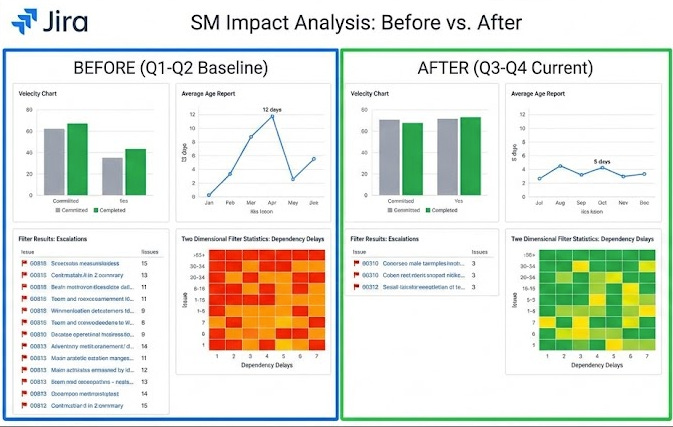
Share one visible outcome every Sprint Review or monthly update.
Try This Next
As a Scrum Master, change one line in your updates:
From: “Supported the team during Sprint challenges”
To: “After tightening Sprint Goal clarity, predictability improved from ~60% to ~80% in 4 Sprints.”
Perception shifts almost immediately.
Leaders don’t promote effort. They promote results they can see and explain upward.
Lesson 02: Staying Inside the Team Boundary Limits Your Career
This is subtle and very common.
Talented Scrum Masters often say:
“I want to first fix my team before looking elsewhere.”
Senior Scrum Masters are noticed for system-level impact, not team-level comfort.
When your influence stops at:
one team
one backlog
one Sprint
Your career usually stops there too.
Career growth starts when your impact extends beyond your immediate circle.
What to Do
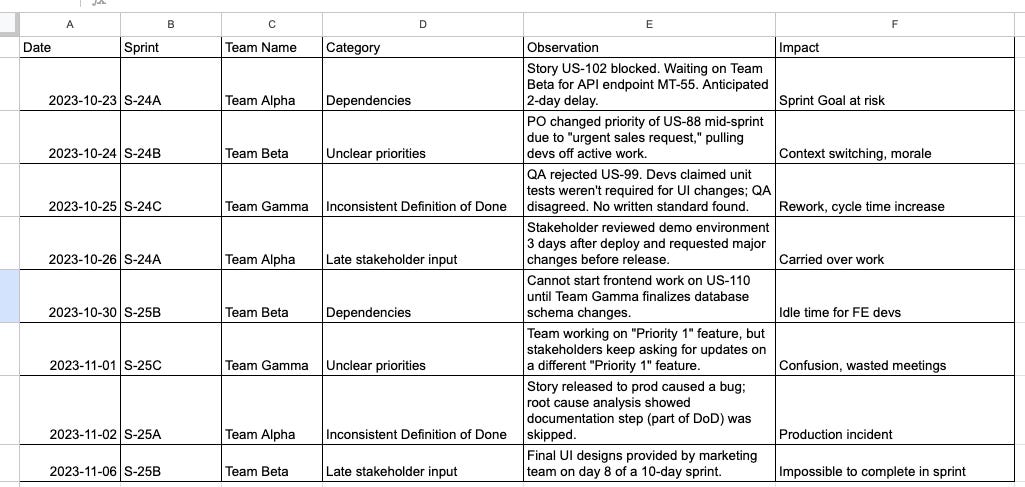
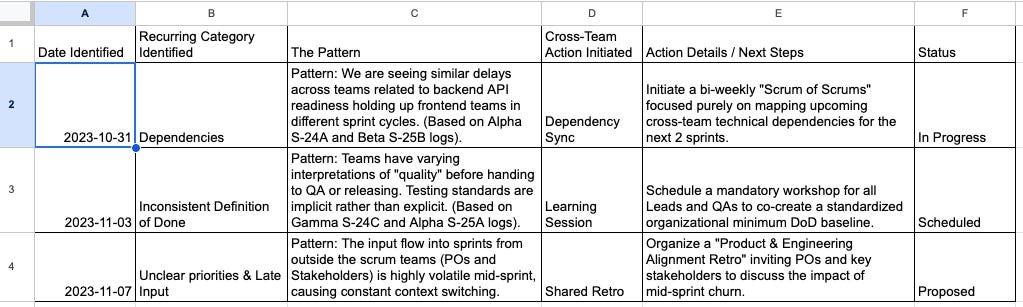
Identify one recurring problem across teams:
dependencies
unclear priorities
inconsistent Definition of Done
late stakeholder input
Initiate a small cross-team conversation:
shared Retro
dependency sync
learning session
Capture patterns, not problems:
“We’re seeing similar delays across teams.”
Share insights with leadership — not complaints.
Try This Next
Facilitate a monthly dependency sync across teams.
Within 1-2 months, you will notice:
dependency-related delays dropping
being invited to leadership planning forums
You don’t get promoted after acting senior.
You get promoted because you already are.
Lesson 03: Avoiding Conflict Keeps You Safe — and Stuck
Many Scrum Masters are conflict-averse.
They value harmony.
They don’t want to be seen as difficult.
They smooth things over.
I used to do this too.
Leadership doesn’t promote peacekeepers. They promote clarity creators.
Clarity often requires discomfort. So, avoiding conflict avoids visibility.
What to Do
Replace agreement-seeking with curiosity:
“Help me understand what you’re optimising for.”
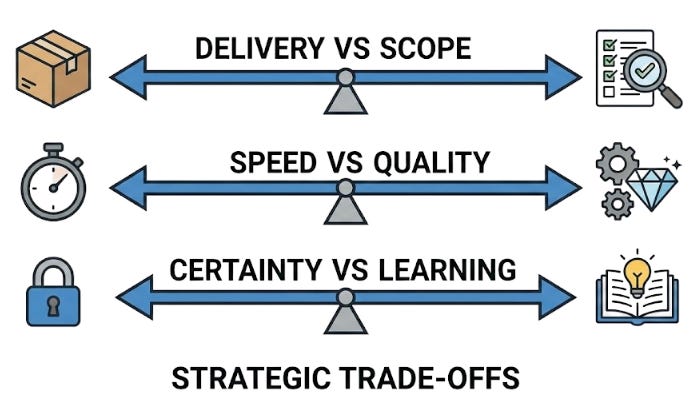
Surface tensions early:
delivery vs scope
speed vs quality
certainty vs learning
Make trade-offs explicit — and visible.
A Real Case
A Scrum Master, whom I mentored, facilitated a tough conversation between business and tech around unrealistic deadlines.
Instead of pushing back emotionally, he used delivery data.
Outcome:
clearer commitments
fewer escalations
increased trust from leadership
Your ability to hold tension calmly is a leadership signal.
Lesson 04: If You Can’t Explain Your Impact, No One Else Will
This is where many careers quietly stall.
Scrum Masters often say: “I don’t like talking about myself.”
I understand that discomfort.
But silence creates its own narrative — and it’s rarely a flattering one.
Not owning your impact doesn’t make you humble. It makes you invisible.
What to Do
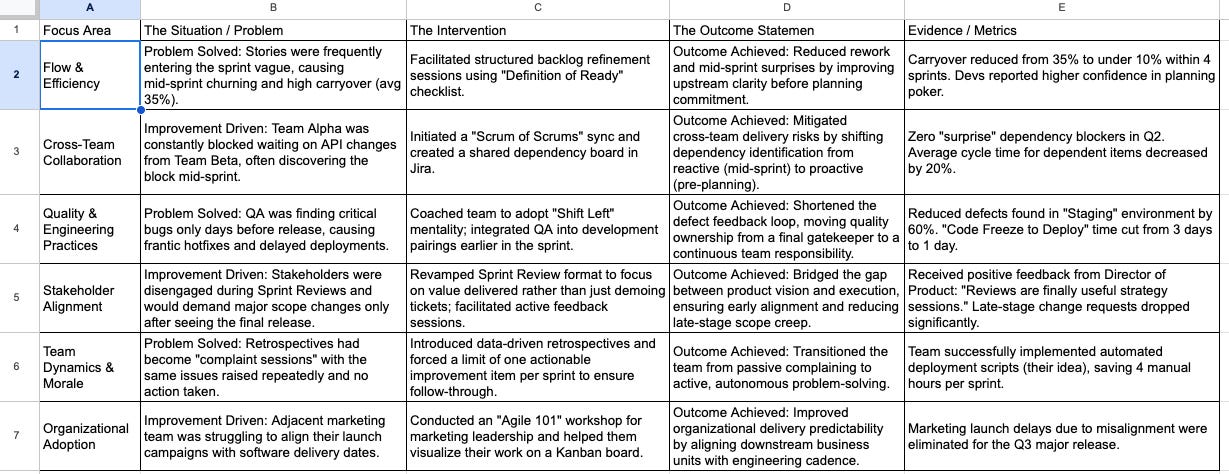
Maintain a Career Impact Log:
improvement driven
problem solved
outcome achieved
Convert activities into outcomes:
Not: “Facilitated refinement”
But: “Reduced rework by improving clarity upstream”
Prepare a simple quarterly story:
What was the problem?
What changed?
What improved?
Practice saying it without apology.
Try This Next
Rewrite your self-review from a task list to an impact story.
If you don’t tell your story, someone else will — and they won’t tell it kindly.
Lesson 05: Hard Work Stops Being Enough at a Certain Point
This was the hardest lesson for me personally.
Early in your career, effort pays off. Later, leverage pays off.
Scrum Masters who stay stuck often:
work longer hours
take on more responsibility
solve more problems
But they don’t change how they create impact.
Career growth requires intentional positioning, not just effort.
What to Do
Ask yourself quarterly:
“What would make leadership say they’d struggle without me?”
Focus on fewer, higher-leverage improvements.
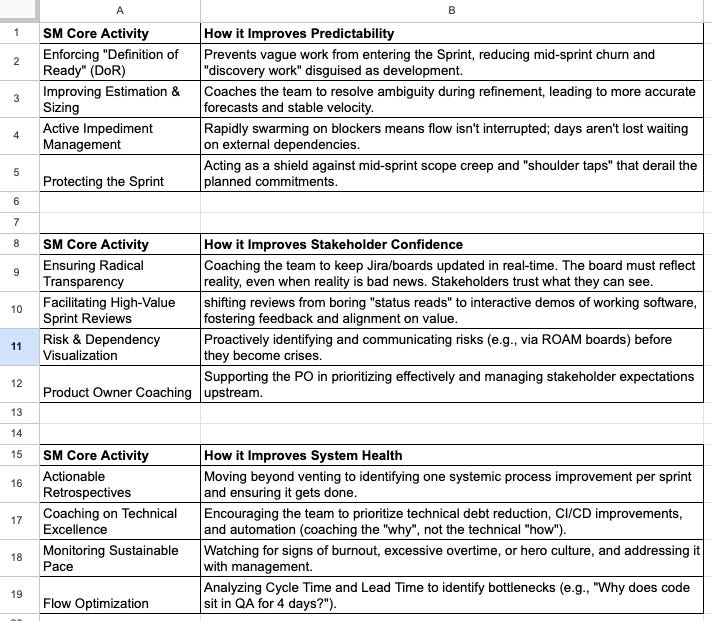
Align your work to:
delivery predictability
stakeholder confidence
system health
Make those connections explicit.
The moment hard work stops working is the moment leadership work begins.
Closing Thought
Ask yourself this honestly: “If I stopped showing up tomorrow, what visible impact would disappear?”
If the answer is unclear — that’s your signal.
Most Scrum Masters don’t stay stuck because they lack skill.
They stay stuck because their impact is invisible where it matters.
Your career doesn’t grow when you do more.
It grows when what you do finally counts.
Join our Community — Practice It Live!
If you want to practice these techniques live, join my next AI & Agile Career Accelerator - Community of Practice.

🚀 Join us this Saturday. Practice real scenarios, get coached live, and build the confidence to lead your next refinement like a pro.
Ace Every Interview Question — With Real Answers That Work
If you’re preparing for Scrum Master, Agile Coach, or Product Owner interviews, this is your go-to prep pack. New set every week!
📥 Download your free Agile Interview Q&A Set here →
Why Subscribe
Each week, I share battle-tested strategies, messy lessons, and practical tools that help Scrum Masters, Product Owners, and change agents like you make sense of chaos — without sugar-coating it.
If you found this useful, subscribe.
This isn’t theory. It’s real work, made a little easier — one step at a time.
Thanks for reading Strategy For Success! Subscribe for free to receive new posts and support my work.
“Just because I understand it, does not mean everyone understands it. And just because I do not understand it, does not mean no one understands it.”

Anand Pandey
Thanks for reading Strategy For Success! Subscribe for free to receive new posts and support my work.