
Why Brilliant Scrum Masters Still Fail Interviews
And the invisible gap between doing the job well and getting hired for it

Over the last few years, I’ve coached many Scrum Masters who were genuinely strong in their roles.
Teams trusted them. Delivery was stable. Stakeholders respected them.
And yet…
They kept failing interviews.
Not first rounds. Not screening calls.
They reached final rounds — and then got rejected.
I remember one such conversation clearly.
After a long silence on the call, the Scrum Master said:
“Anand, I don’t get it. I’m doing this job every day. Why does it fall apart in interviews?”
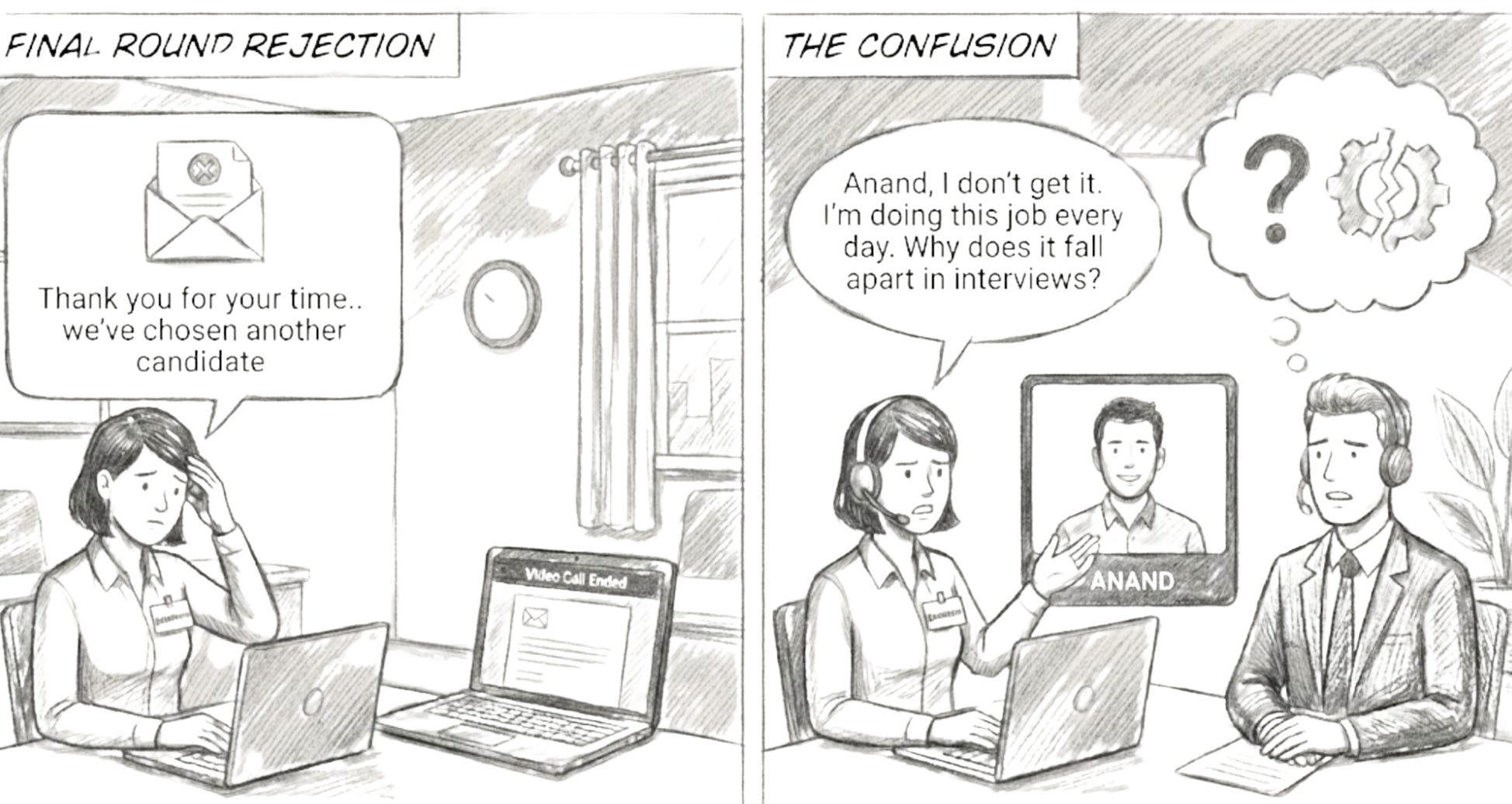
That question is more common than people realise.
And the answer is uncomfortable:
Most great Scrum Masters don’t fail interviews because they lack skill.
They fail because they don’t speak the language interviewers listen for.
Watching this pattern repeat forced me to step back and analyse why.
The mismatch no one prepares you for
Here’s what most Scrum Masters believe:
“If I do the job well, I’ll naturally clear interviews.”
Here’s what interviews actually test:
How you think under pressure
How you explain impact, not activity
How you handle conflict, not harmony
How you make trade-offs, not processes
How you influence without authority
That gap — between doing and articulating — is where many great candidates stumble.
Let me break down the patterns I’ve repeatedly seen.
The Interview Blind Spots That Trip Up Great Scrum Masters
Blind Spot 01: Talking About Ceremonies Instead of Outcomes
In interviews, I often hear answers like:
“I facilitate Daily Scrum, Sprint Planning, Reviews, and Retrospectives…”
Nothing wrong with that.
But here’s what the interviewer is silently thinking: “So what changed because of you?”
Great Scrum Masters often describe what they did, not what improved.
What Interviewers Are Actually Looking For
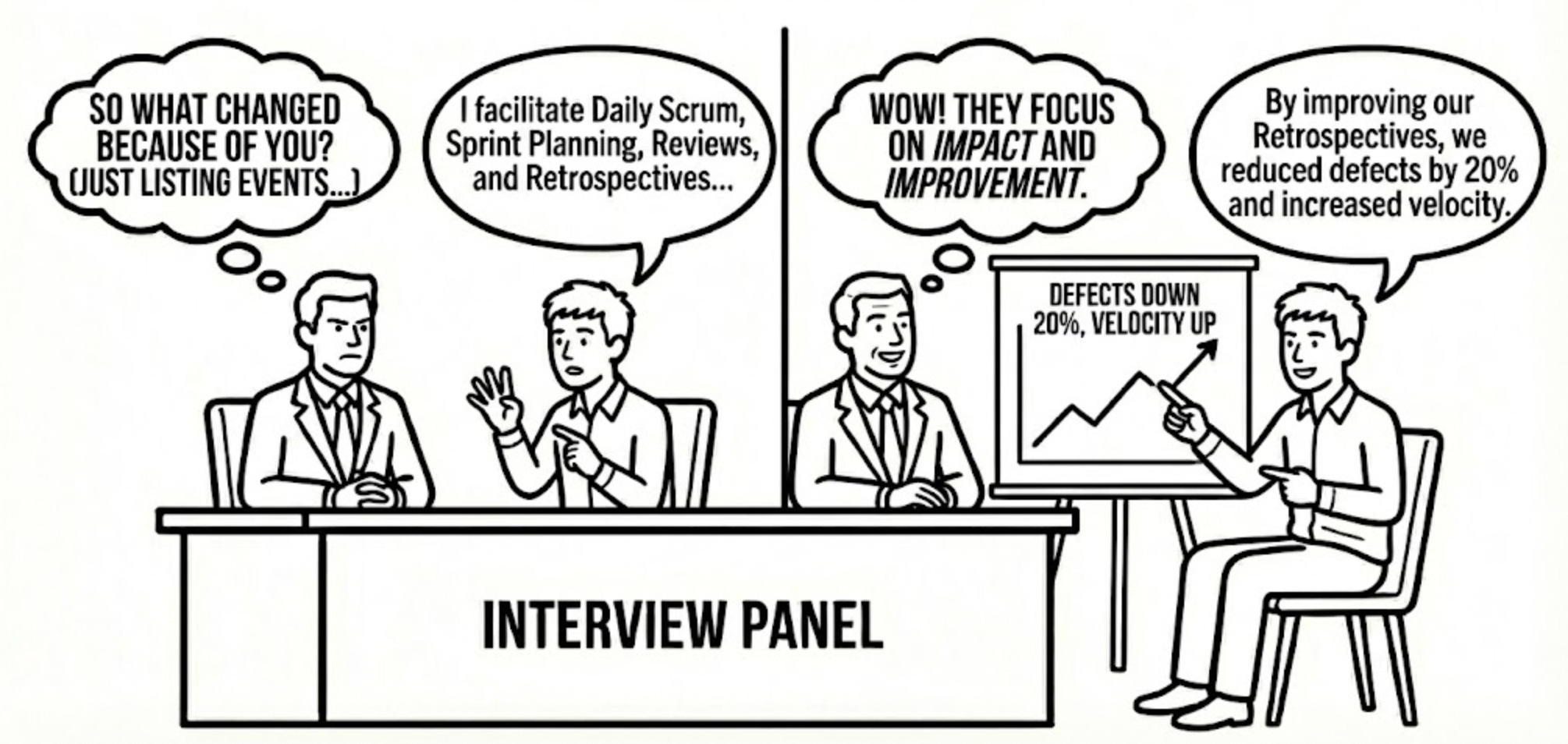
How I Coach Candidates to Fix This
I ask them to restructure answers like this:
Before: “I facilitated retrospectives to help the team improve.”
After: “After improving retrospective focus, Sprint Goal success went from ~60% to ~80% in four Sprints.”
Same work. Very different signal.
Interviews reward clarity of impact, not completeness of process.
Blind Spot 02: Avoiding Conflict Stories
Many Scrum Masters avoid talking about conflict because they fear sounding negative.
So they say things like:
“We aligned everyone…”
“We resolved it collaboratively…”
That sounds nice — but it’s vague.
What Interviewers Are Actually Looking For
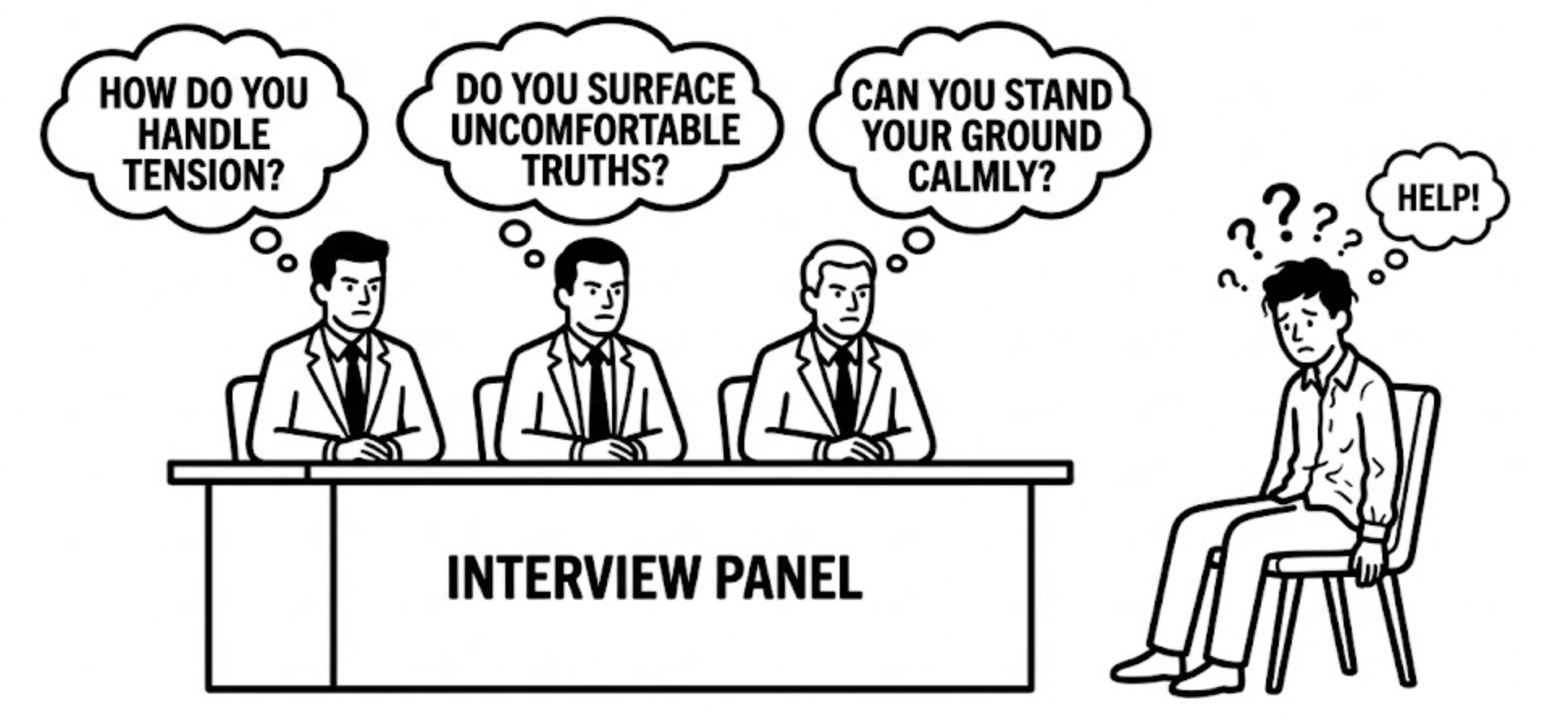
Leadership roles require conflict navigation, not conflict avoidance.
Candidates who skip conflict stories often get feedback like: “Good experience, but lacking seniority.”
Not because they lack it — but because they didn’t demonstrate it.
How I Coach Candidates to Fix This
I help them frame conflict like this:
What was the tension?
What trade-offs were at play?
What data or facilitation helped alignment?
What changed after?
Handled well, conflict stories increase trust.
Blind Spot 03: Sounding Like a Support Role Instead of a Leader
Another common pattern:
Scrum Masters describe themselves as:
supporters
facilitators
helpers
coordinators
All true.
But interviews for senior roles are asking a different question: “Would this person lead when things get messy?”
What Interviewers Are Actually Looking For
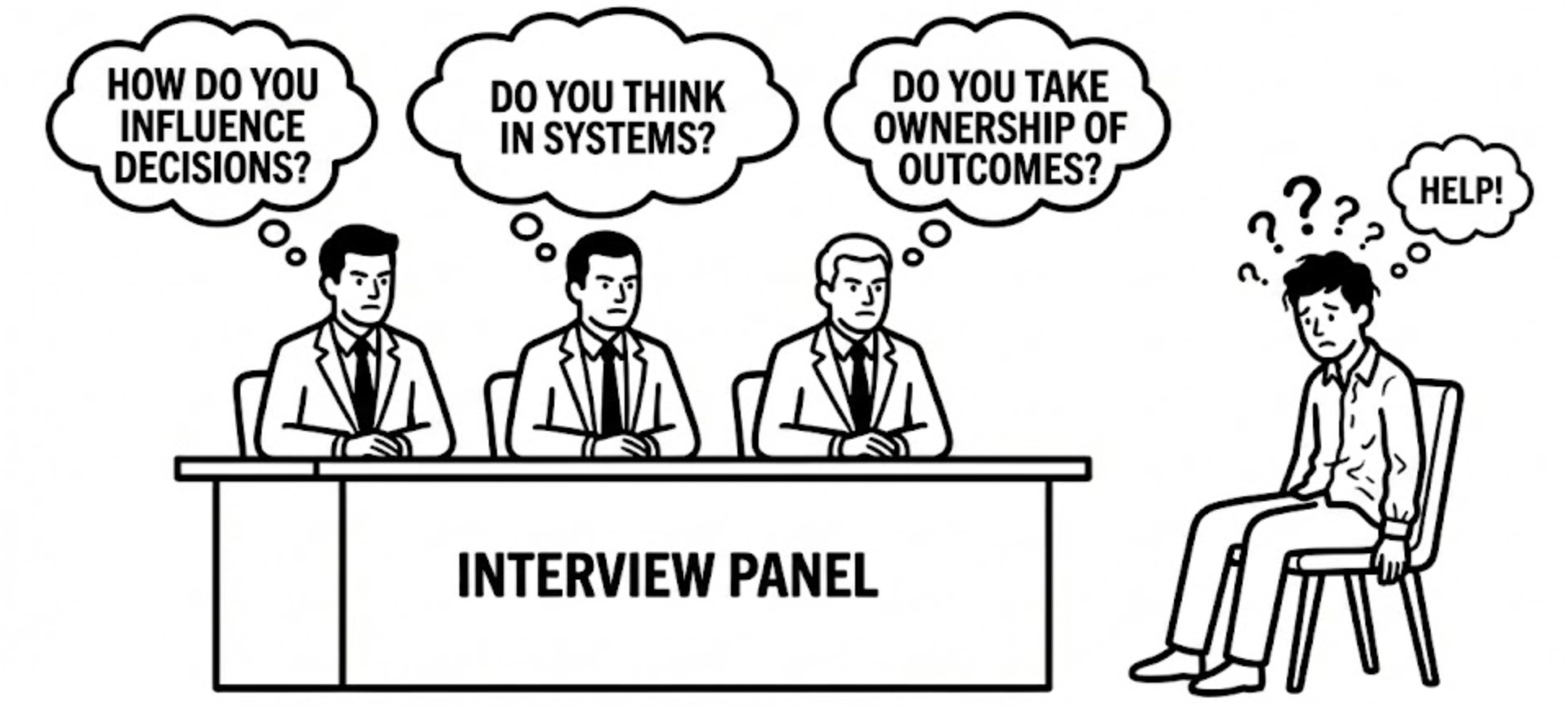
How I Coach Candidates to Fix This
One candidate kept saying: “I supported the Product Owner…”
I asked him to reframe: “What decision changed because of you?”
That shift alone transformed his answers.
Senior roles aren’t about being useful. They’re about being impactful under uncertainty.
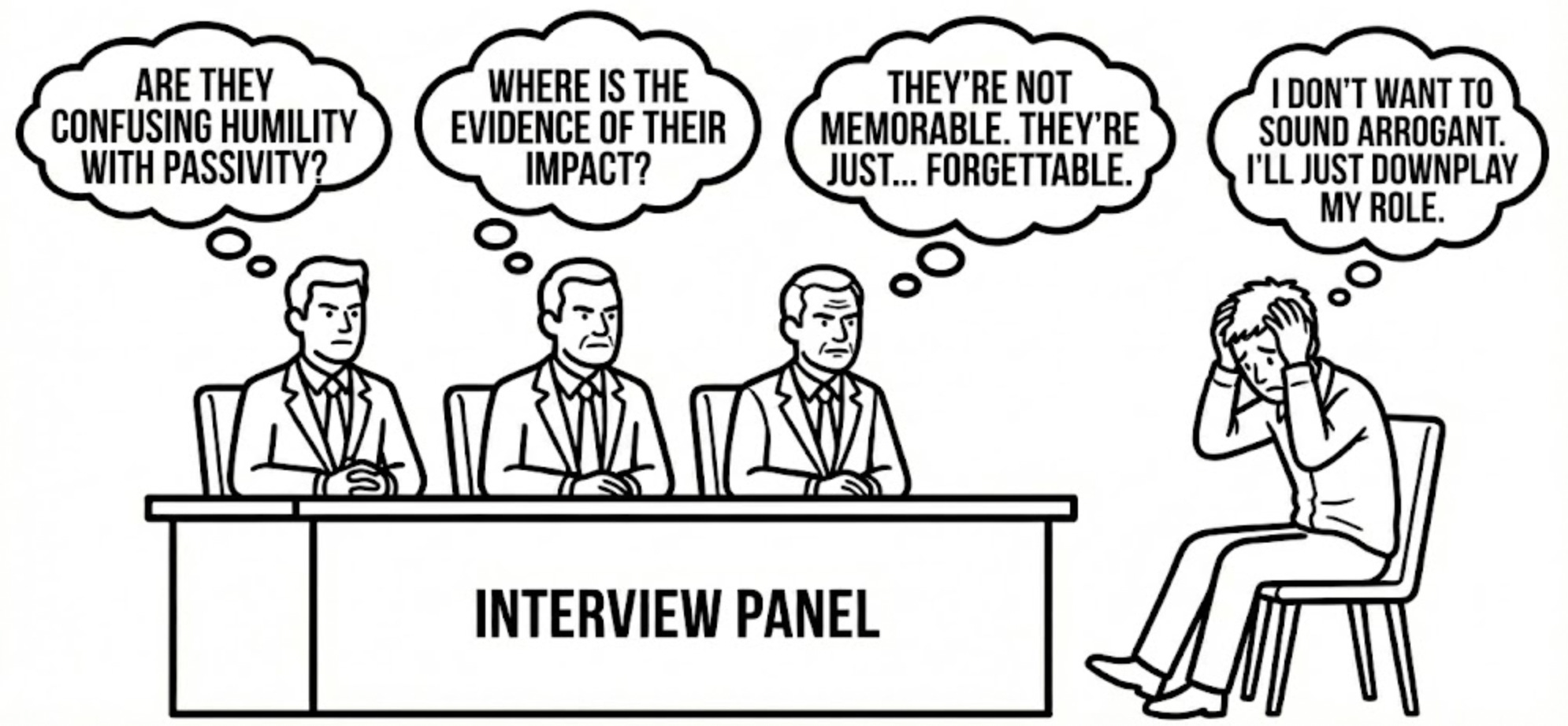
Blind Spot 04: Not Owning Their Own Impact
This one is subtle and deeply cultural.
Many Scrum Masters feel uncomfortable talking about themselves.
They worry about:
sounding arrogant
taking credit from the team
being judged
So they underplay their role.
In interviews, that silence becomes a liability.
What Interviewers Are Actually Looking For
Not owning your impact doesn’t make you humble.
It makes you forgettable.
How I Coach Candidates to Fix This
I ask them to maintain a simple Impact Inventory:
What problem existed?
What intervention did you lead?
What measurable change followed?
Then practice telling that story calmly — without apology.
Blind Spot 05: Answering the Question They Heard, Not the One Being Asked
This is where interviewer psychology matters.
Many questions sound simple, but aren’t.
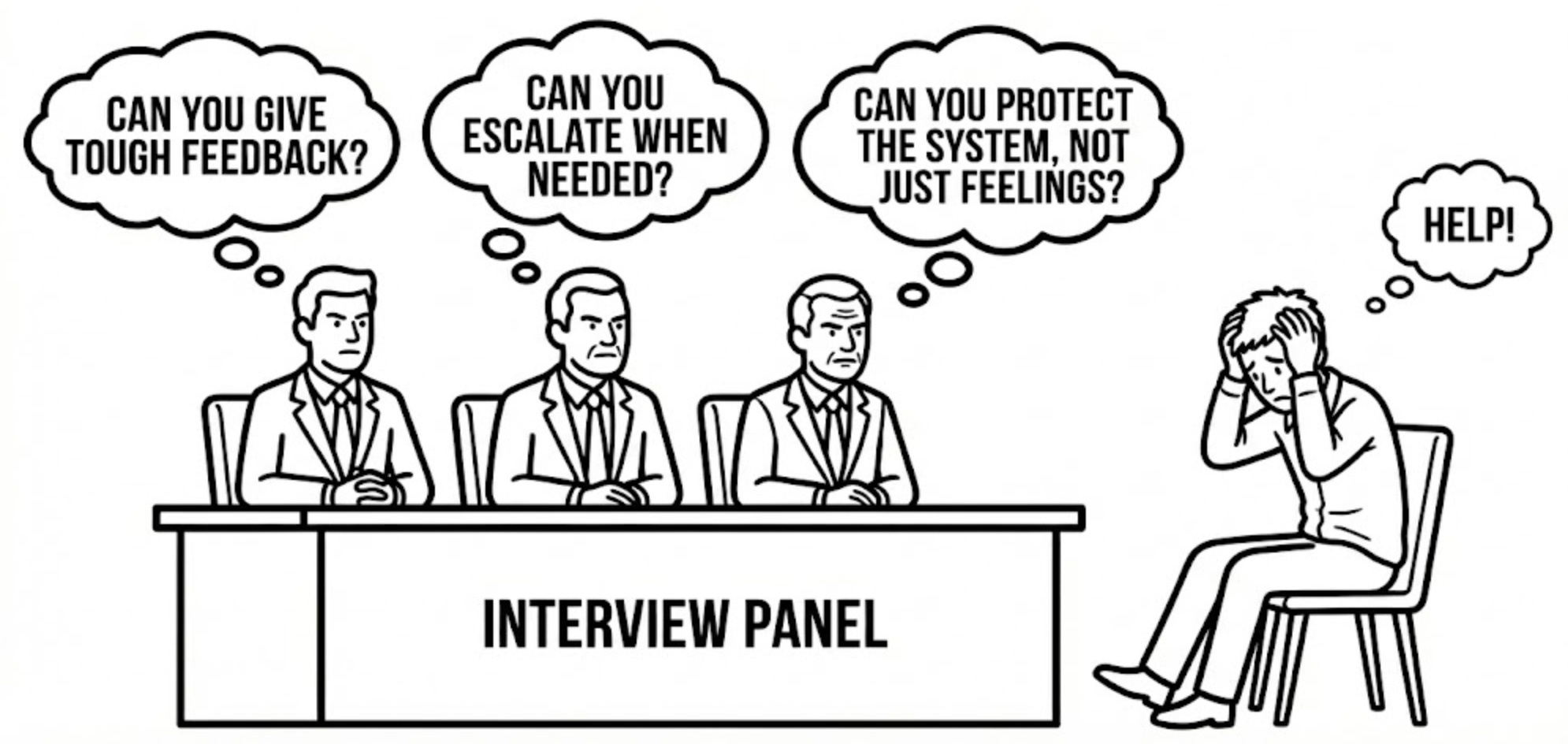
Example: “How do you handle an underperforming team member?”
Candidates answer with empathy and coaching techniques.
What Interviewers Are Actually Looking For
How I Coach Candidates to Fix This
I help interviewees address:
the surface question
and the hidden intent beneath it
This is where many otherwise strong candidates lose offers.
Reflection Challenge
Think about your last interview.
Ask yourself honestly: “Did I talk about what I did — or what changed because of me?”
That one distinction decides many outcomes.
Most Scrum Masters don’t fail interviews because they’re not good.
They fail because they don’t show how they create impact when it matters.
Join our Community — Practice It Live!
If you want to practice these techniques live, join my next AI & Agile Career Accelerator - Community of Practice.

🚀 Join us this Saturday. Practice real scenarios, get coached live, and build the confidence to lead your next refinement like a pro.
Ace Every Interview Question — With Real Answers That Work
If you’re preparing for Scrum Master, Agile Coach, or Product Owner interviews, this is your go-to prep pack. New set every week!
📥 Download your free Agile Interview Q&A Set here →
Why Subscribe
Each week, I share battle-tested strategies, messy lessons, and practical tools that help Scrum Masters, Product Owners, and change agents like you make sense of chaos — without sugar-coating it.
If you found this useful, subscribe.
This isn’t theory. It’s real work, made a little easier — one step at a time.
Thanks for reading Strategy For Success! Subscribe for free to receive new posts and support my work.
“Just because I understand it, does not mean everyone understands it. And just because I do not understand it, does not mean no one understands it.”

Anand Pandey