
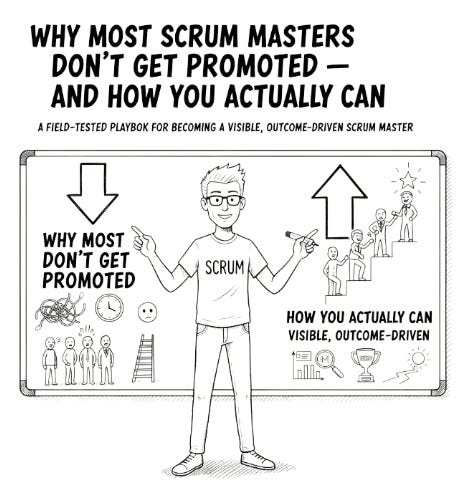
Why Most Scrum Masters Don’t Get Promoted — And How You Actually Can
A field-tested playbook for becoming a visible, outcome-driven Scrum Master.

Across the last decade, I’ve coached more than 800 Scrum Masters.
Different companies. Different maturity levels. Different challenges.
But the same frustration shows up again and again:
“Anand… I’m doing everything right. Why am I still not growing?”
It always reminds me of one painful moment early in my own career.
Back then, I believed a “great Scrum Master” was someone who:
Ran smooth events
Removed blockers fast
Kept everyone happy
Maintained harmony
Stayed invisible
Let the team shine
Avoided conflict
I genuinely thought this was excellence.
Until my manager asked me during a quarterly review:
“Anand… can you summarise what actually changed because of your coaching last quarter?”
I froze.
Not because I lacked impact — but because I had no proof of it.
No metrics. No visibility. No narrative. No evidence.
Nothing leaders could recognise or reward.
That evening, I wrote something that shifted my entire career:
“Invisible work is the easiest work to ignore.”
And then I wrote something even more painful:
“I am doing valuable work. But no one can see it.”
If you’ve ever felt unseen, undervalued, or stuck — this newsletter is for you.
Because what kept me stagnant for years was this truth:
Scrum Masters don’t get promoted for managing events.
They get promoted for enabling measurable, visible, organisational improvement.
Today, I’m sharing the exact playbook I used to transform my career —
and the one I now teach to Scrum Masters across industries.
What You’ll Learn Today
By the end of this newsletter, you’ll know:
The 5 behaviours leaders actively look for before promoting a Scrum Master
How to shift from ceremony facilitation to business impact
Scripts and techniques to make your work visible (without bragging)
How to influence beyond your team
The metrics that prove your coaching impact
How to build a promotion-ready career narrative
Strategy 01: Shift From “Smooth Ceremonies” to “Business Outcomes”
Why This Matters
Leadership doesn’t see your daily ceremonies.
Leadership sees:
Predictability
Quality
Stability
Risk
Throughput
Release confidence
Scrum Masters who influence these outcomes get promoted.
Not the ones who “keep meetings running smoothly.”
What To Do
Track 5 delivery metrics weekly:
Sprint Goal Success %
Lead Time
Cycle Time
Throughput
Production Defects
Add a simple Delivery Snapshot to every Sprint Review.
Speak in outcomes:
Instead of: “We completed 38 points”
Say: “Predictability improved by 17%.”
Connect the improvement to your coaching: “This change came after we improved refinement quality.”
Real Case
One of my coachee Scrum Masters visualized his team’s improvement with management:
Lead Time → 27 → 11 days
Escaped Defects → reduced by 32%
Sprint Goal Success → 46% → 83%
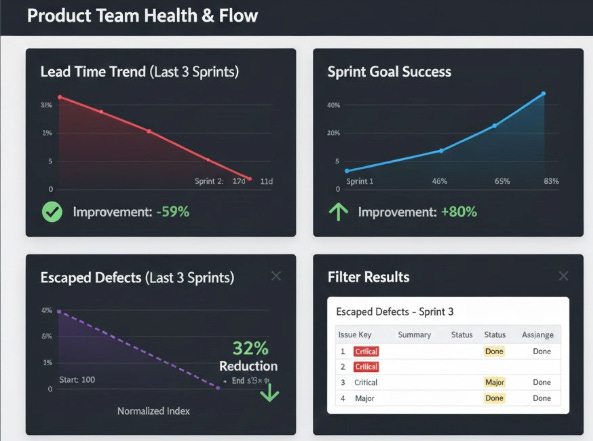
That Scrum Master became the first Senior SM in the Business Unit.
Try This
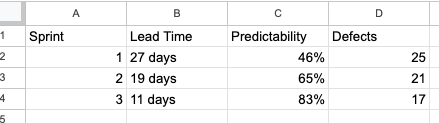
Open Excel → Add these columns:
Sprint | Lead Time | Predictability | Defects
Fill the last 3 Sprints.
Your impact story will reveal itself.
Challenge I faced
Teams resisted metrics: “We don’t want to be judged.”
I felt torn between leadership expectations and team comfort.
I reframed: “Metrics aren’t to judge you. They’re showing me where to coach.”
Opposition ended.
Strategy 02: Build Leadership Visibility (Without Sounding Political)
Why This Matters
Good work doesn’t get rewarded.
Visible, measurable work does.
Leaders cannot promote what they cannot see.
What To Do
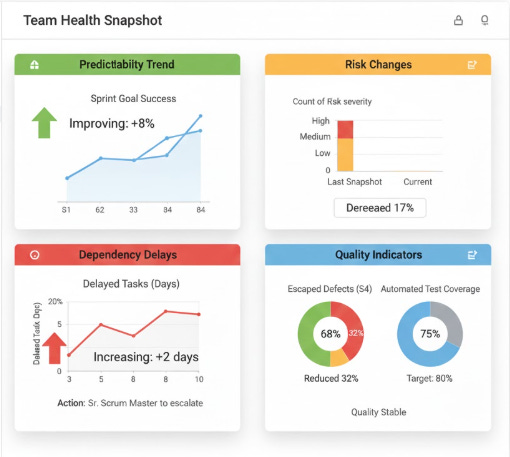
Create a bi-weekly Team Health Snapshot (1 page).
Highlight trends, not events:
Predictability trend
Risk changes
Dependency delays
Quality indicators

Send your manager this message:
“Would you find value in a monthly 1-page team progress snapshot? I can share it.”
Use this script with your manager:
“Here are two improvements from the last Sprint — and the evidence behind them.”
Tip
Don’t avoid leadership because you feel you had no “big wins.”
Stop sharing activities. Start sharing outcomes.
Strategy 03: Influence Beyond Your Team (System-Level Leadership)
Why This Matters
Senior roles require system impact, not team comfort.
If your influence stops at your team boundary,
your growth stops there too.
What To Do
Start a cross-team sync every two weeks.
Coach another team on one metric:
Refinement
Cycle Time
Definition of Done
Share cross-team patterns with leadership.
Message another Scrum Master: “Want to co-host a shared Retro next month?”
Real Case
A cross-team initiative led by one Scrum Master led to:
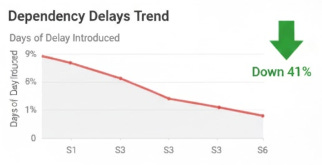
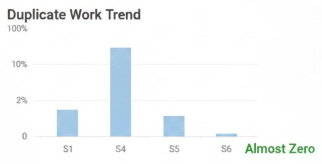
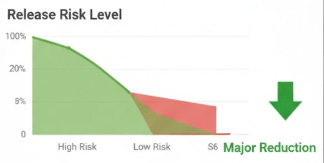
He was promoted to Agile Coach in under 8 months.
Tip
If teams question: “Why are you involved here?”
Don’t feel uncomfortable.
Reframe it as: “I’m here to share patterns — not to interfere.”
People do open up quickly.
Strategy 04: Become Exceptional at Difficult Conversations
Why This Matters
Scrum Masters who avoid conflict remain coordinators.
Scrum Masters who navigate conflict become leaders.
What To Do
Use curiosity as your conflict opener:
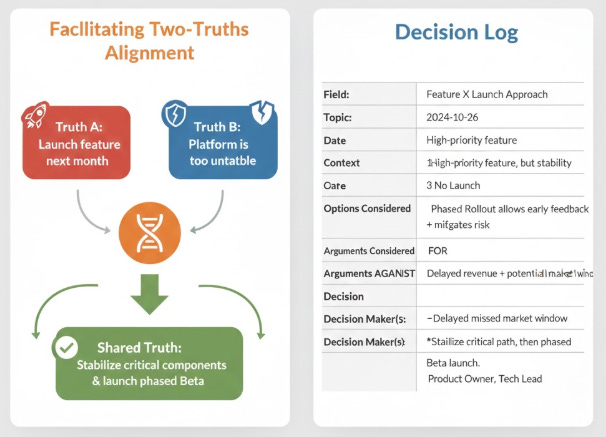
“Help me understand what you’re optimising for.”Facilitate the Two-Truths Alignment:
Truth A
Truth B
Shared Truth
Create a Decision Log to eliminate circular debates.
Try This
Write down one conflict you’re currently avoiding.
Identify the two truths.
Find the shared truth.
Strategy 05: Build a Promotion-Ready Career Narrative
Why This Matters
Promotions aren’t about working hard.
They’re about explaining your impact clearly and confidently.
What To Do
Create a 5-Line Impact Summary:
Predictability improved
Cycle time reduced
Fewer defects
Better alignment
Faster delivery
Maintain a weekly Wins Log.
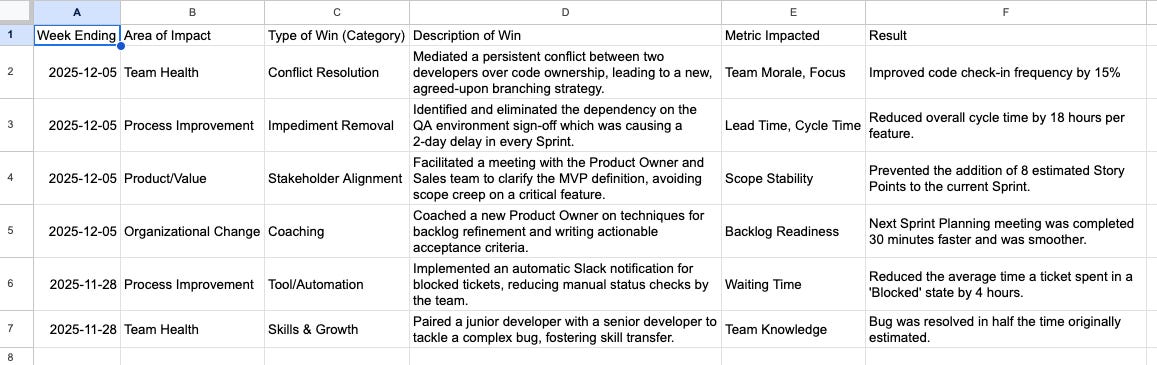
Tip:
Practice your 2-minute Promotion Pitch:
“Here are the 3 biggest improvements I drove this year.”Write:
“I helped improve ______ by ______% in ___ months.”
Example: “I improved predictability by 37% and throughput by 22% across two teams.”
Reflection Challenge
Before your next Sprint Review, ask yourself:
“What visible improvement did I help create this month — and how will I communicate it?”
This one question can change your entire promotion path.
Join our Community — Practice It Live!
If you want to practice these techniques live, join my next AI & Agile Career Accelerator - Community of Practice.

🚀 Join us this Saturday. Practice real scenarios, get coached live, and build the confidence to lead your next refinement like a pro.
Ace Every Interview Question — With Real Answers That Work
If you’re preparing for Scrum Master, Agile Coach, or Product Owner interviews, this is your go-to prep pack. New set every week!
📥 Download your free Agile Interview Q&A Set here →
Why Subscribe
Each week, I share battle-tested strategies, messy lessons, and practical tools that help Scrum Masters, Product Owners, and change agents like you make sense of chaos — without sugar-coating it.
If you found this useful, subscribe.
This isn’t theory. It’s real work, made a little easier — one step at a time.
Thanks for reading Strategy For Success! Subscribe for free to receive new posts and support my work.
“Just because I understand it, does not mean everyone understands it. And just because I do not understand it, does not mean no one understands it.”

Anand Pandey
Thanks for reading Strategy For Success! Subscribe for free to receive new posts and support my work.