
You're not getting rejected — you're getting missed
Why qualified Scrum Masters stay invisible in the job market — and a 3-line check that fixes it.

A coaching client told me last month he’d “been rejected from 40 roles.” He said it the way you’d report a diagnosis — flat, certain, a little ashamed.
So we looked at the 40.
For 31 of them, he had no evidence he’d been rejected at all. No interview. No call. Often no human reply — just silence, or an automated line months later.
He hadn’t been rejected 40 times. He’d been seen maybe nine times, and rejected after some of those.
That distinction matters more than it sounds.
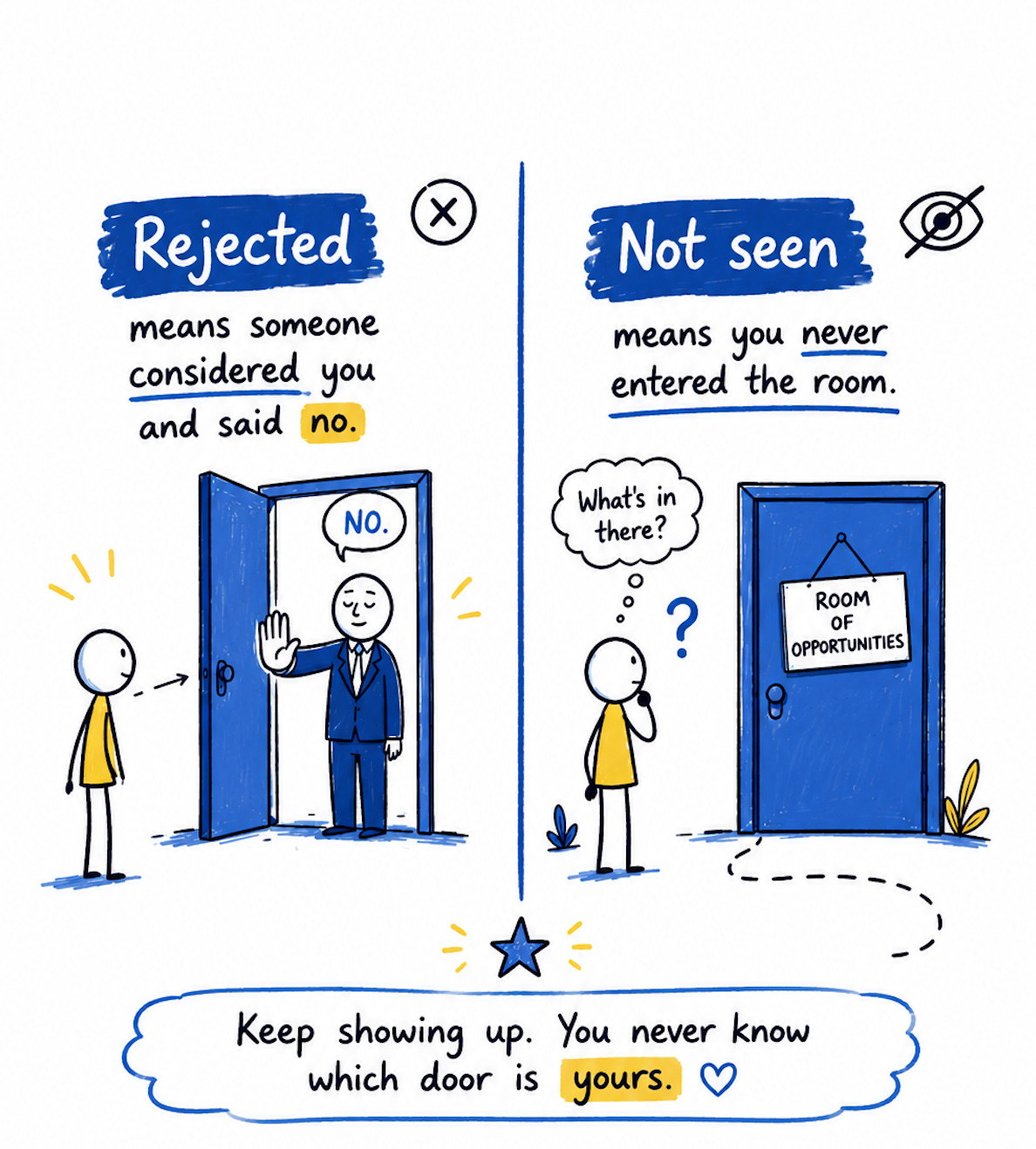
They feel identical from the outside — both are silence — but they have completely different fixes.
Rejection is a performance problem: your interview, your answers, your fit. Invisibility is a positioning problem: your resume never survived the 6-second scan, your title didn’t match the search filter, your application was one of 300 and nothing made it stop.
Here’s the trap: most candidates treat every silence as rejection. So they “fix” the wrong thing — they over-prepare interview answers for interviews they’re not being offered. The work is real. It’s just aimed at the wrong target.
Candidate treating silence as rejection: rehearses answers, doubts their skills, applies to more roles the same way.
vs.
Candidate treating silence as invisibility: audits how they show up before a human ever reads them — title, top third of the resume, the first line a recruiter sees.
Same silence. Two completely different responses. Only one of them changes the outcome.
The 3-line check
Before you send another application, look at only the top three lines of your resume — the part visible before anyone scrolls.
Ask:
Would a recruiter who knows nothing about me know what I am, what I’m good at, and what I want — from these three lines alone?
That’s the whole check.
Not your whole resume. Not your experience section. Just the top three lines — because that’s all most recruiters read before deciding to scroll or skip.
If those three lines say “experienced professional seeking opportunities” — you’re invisible, and no amount of interview prep will fix it.
If they say “Scrum Master who cut delivery slippage across three teams — looking for a senior agile role in a product company” — you’ve just survived the scan. Now your interview skills actually get a chance to matter.
If you can’t make those three lines clear — that’s not a rejection problem. That’s the signal.
If this is the work you’re trying to do before your next application, my June cohort is built for it — four weeks of turning the experience you already have into a search that actually finds you. Reply with “cohort” and I’ll send the details before it opens publicly.
How many of your “rejections” were actually just silence?
— Anand